


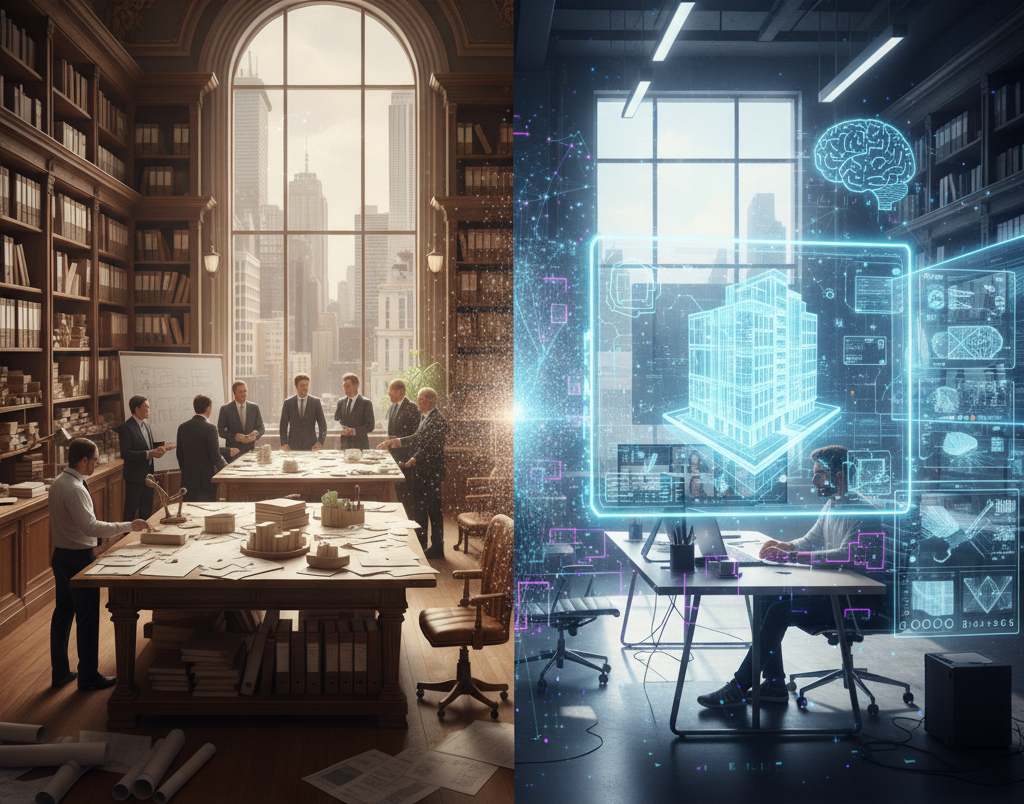
For generations, architectural firms have been synonymous with towering buildings, expansive open-plan offices bustling with engineers, and stacks of blueprints. However, with the advent of the internet and the subsequent revolution in Artificial Intelligence, this traditional image is rapidly dissolving, giving way to a flexible, decentralized, and unprecedentedly efficient business model. The aspiring architect no longer requires a physical office to establish their own firm, and with recent advancements in AI, the need for full-time employees is also diminishing, opening up new horizons for the profession.
The Internet: The First Gateway to Spatial Freedom
Before the internet, having a physical office was crucial for several reasons: meeting clients, holding team meetings, and storing blueprints and documents. The internet fundamentally changed all of this. Remote collaboration tools like Google Drive and Dropbox for documents, and platforms such as Zoom and Microsoft Teams for meetings, have become integral to daily work routines. Architects can now:
Connect with clients globally: The client base is no longer restricted by the geographical proximity of the office. Architects can communicate with clients from any part of the world and showcase their work through online portfolios and personal websites.
Build a virtual team: Collaboration with specialists in various fields (interior design, structural engineering, landscape design) from across the globe is possible without the need to hire them full-time or provide them with physical office space.
Access resources and information: Architectural libraries, codes, and engineering standards are available at the click of a button, negating the need for extensive physical libraries.
Architects in this era are capable of managing vast and complex projects from simple workspaces, be it a home office, a co-working space, or even a coffee shop.

Artificial Intelligence: The Second and More Profound Revolution
While the internet freed architects from the necessity of a physical headquarters, Artificial Intelligence is increasingly liberating them from the need for a large traditional workforce. AI is no longer just an auxiliary tool; it has become a partner capable of performing tasks that once required hours and days of human labor.
Generative Design: AI tools can now generate thousands of design options based on specified criteria (such as energy efficiency, material usage, or aesthetics), saving architects immense time in the conceptual phase. It can analyze data and present innovative solutions that might not have occurred to a human designer.
Data Analysis and Simulation: AI can conduct complex building performance analyses, including airflow, natural lighting, energy consumption, and even pedestrian movement within spaces, all in a fraction of the time required by traditional methods.
Automation of Routine Tasks: AI can assist in drafting construction drawings, preparing bills of quantities, and even writing technical specifications based on initial inputs.
Realistic Rendering and 3D Modeling: AI-powered tools are capable of transforming preliminary sketches into stunningly realistic images with high quality and remarkable speed, reducing the need for specialized 3D rendering experts.
This does not imply that AI will replace architects; rather, it will augment their role as creative thinkers and strategic visionaries. The focus will shift from repetitive tasks to overseeing smart tools, guiding them, and concentrating on the creative and philosophical aspects of design, developing unique visions.
A Flexible and Efficient Future
The combination of internet freedom and the power of Artificial Intelligence places architects in a unique position. They can now establish their own architectural firms with significantly lower operating costs, while being able to compete for global projects and deliver cutting-edge design solutions. The future architect will be capable of working individually or within virtual networks of experts, utilizing AI as an tireless workforce.
This transformation calls upon architects to embrace these technologies, develop their skills in using them, and redefine the concept of an architectural office. A physical headquarters is no longer essential, nor is a large number of employees a measure of success. Efficiency, innovation, and adaptability are the true currencies in the digital architectural market .
ZAKONCEPT
Our clients benefit from our in-depth regional and local knowledge combined with deep experience in architectural design standards and international best practice.
Our team who is considered of the best architects in KSA has designed and managed projects that vary from small private villas to large residential and commercial development projects.
Our concept team will understand the client’s specific requirements and needs and then transform them into space efficient and well-organized floor plans and 3d models and will then detail these drawings incorporating Mechanical Electrical Plumbing systems and structural design to present the client with highly comprehensive architectural drawings.
 WhatsApp us